 Image 1 of 4
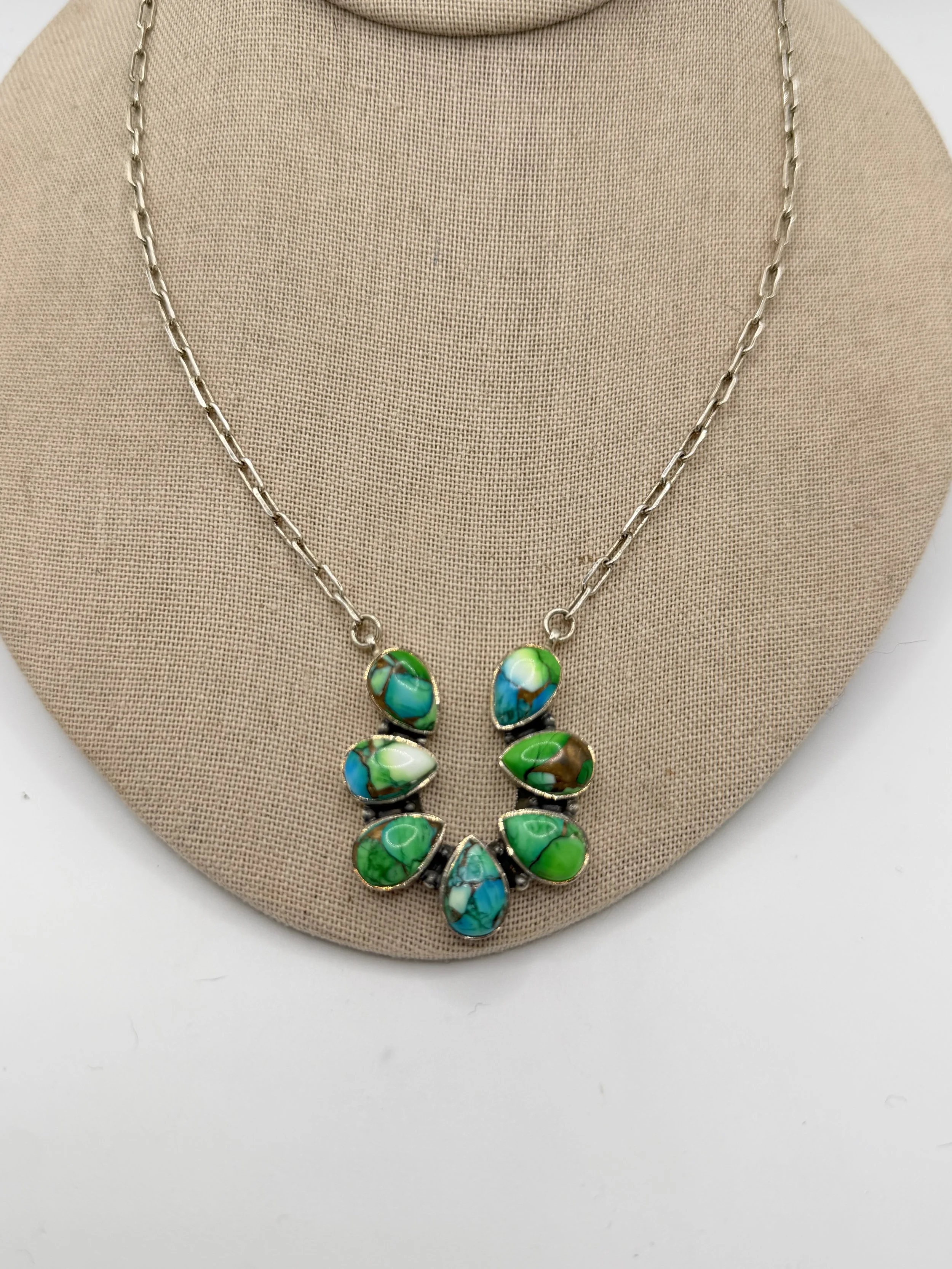 Image 2 of 4
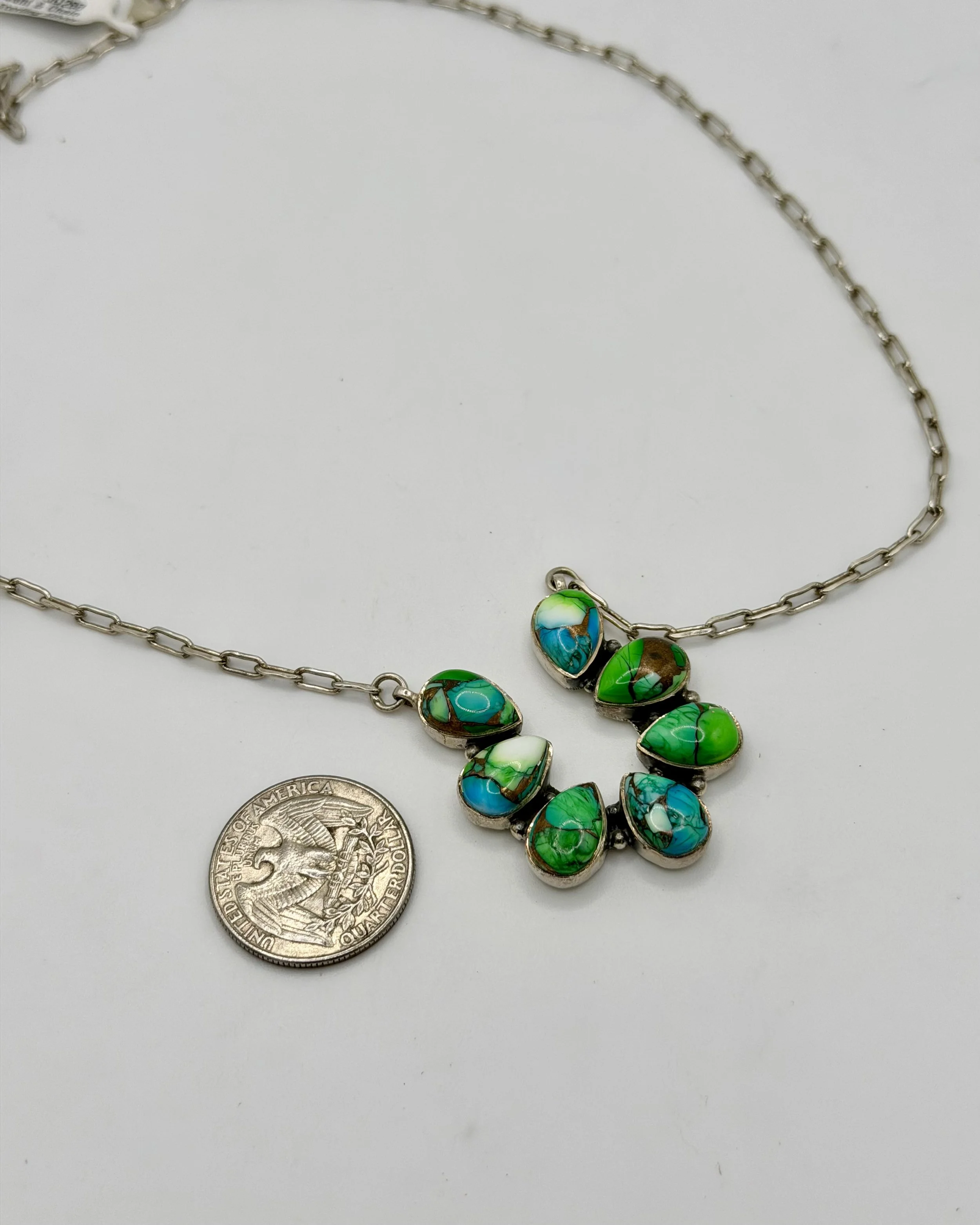 Image 3 of 4
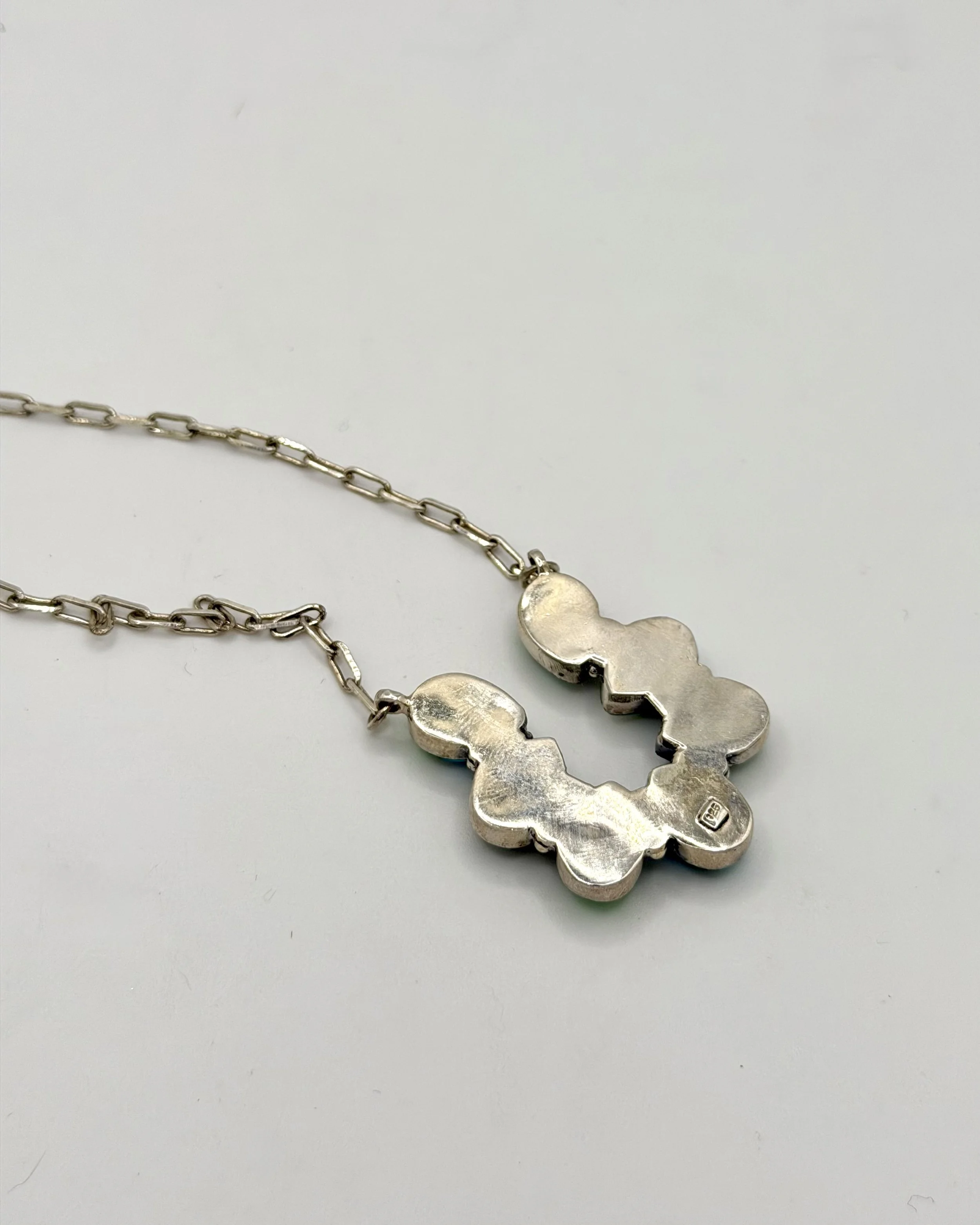 Image 4 of 4
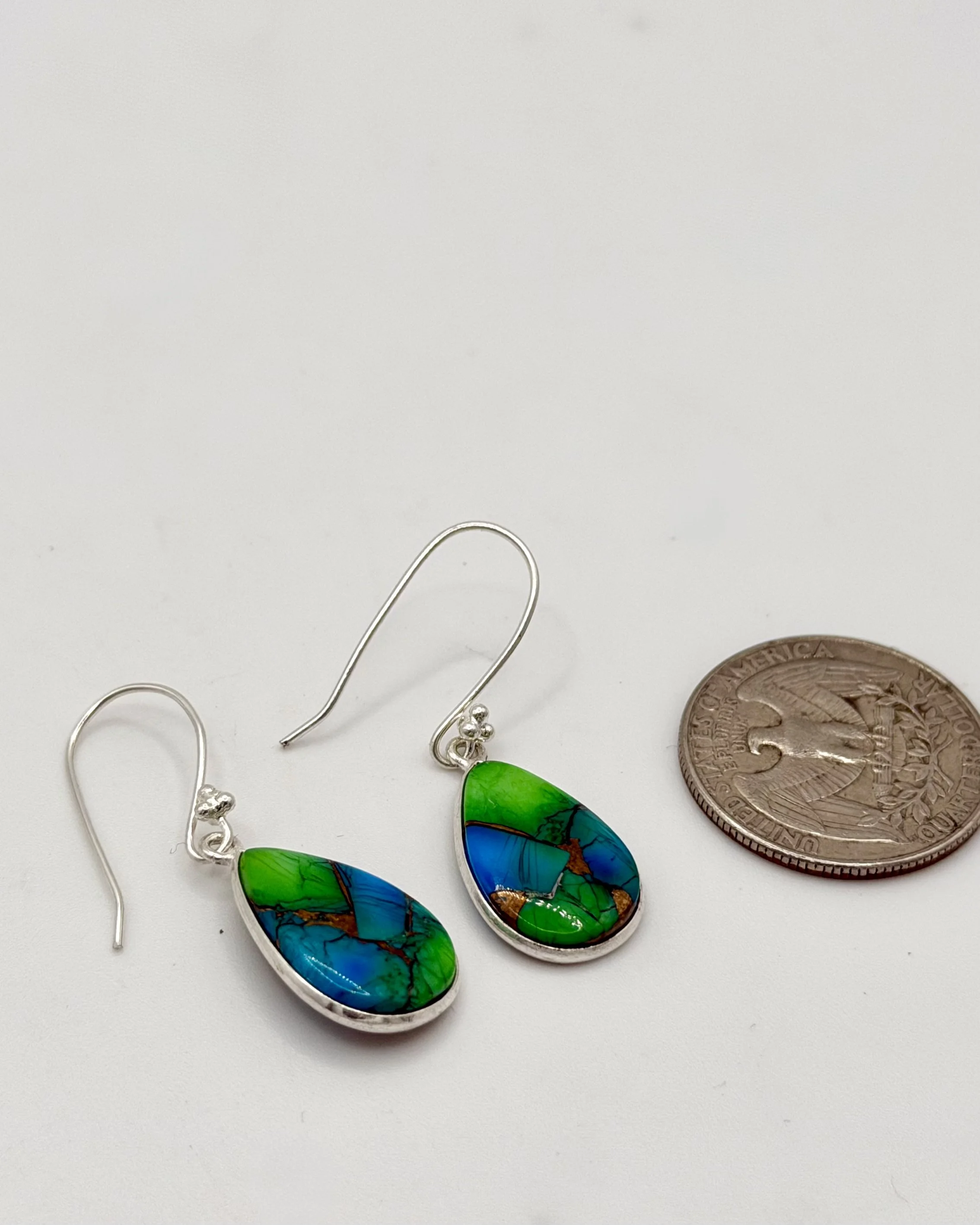
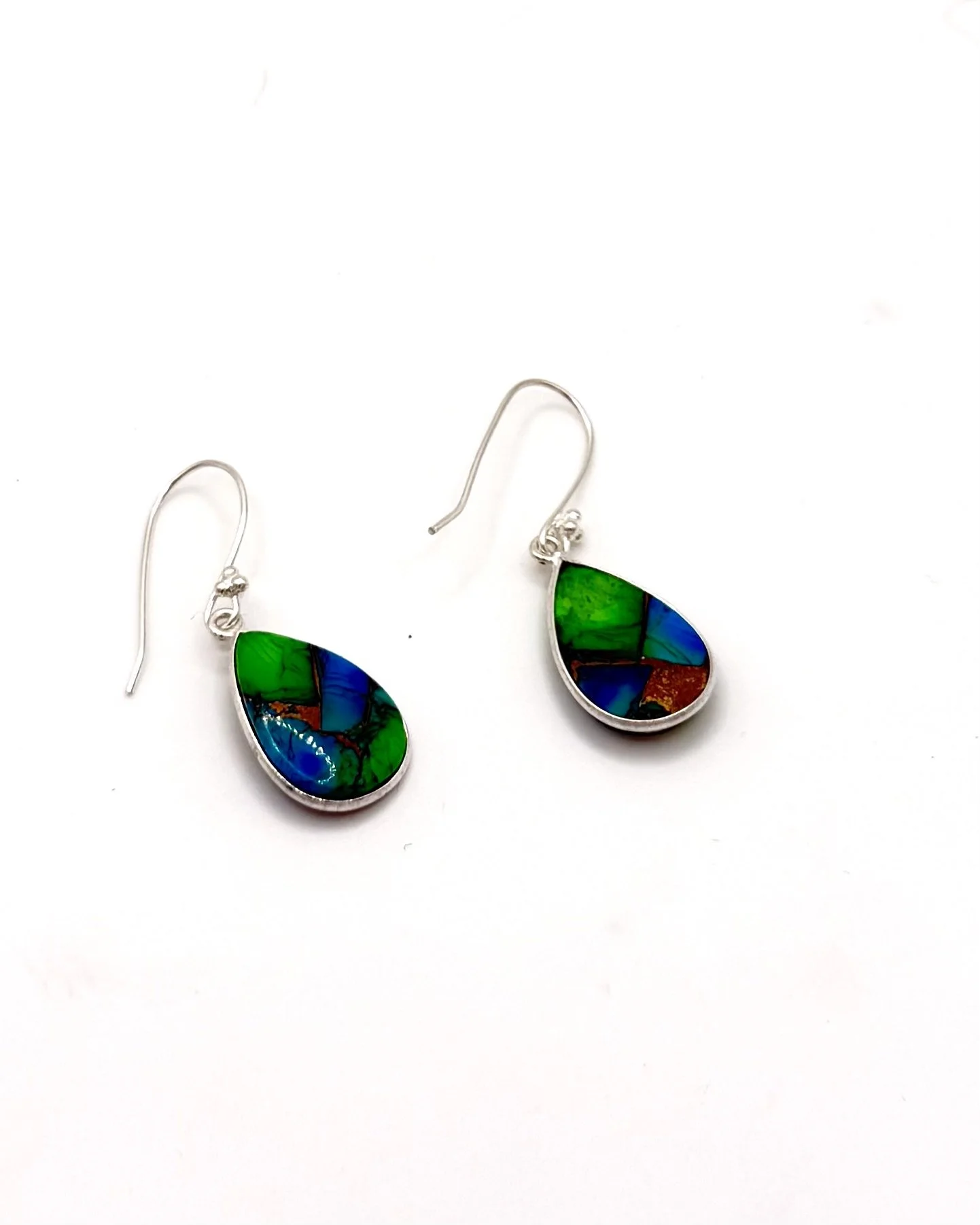
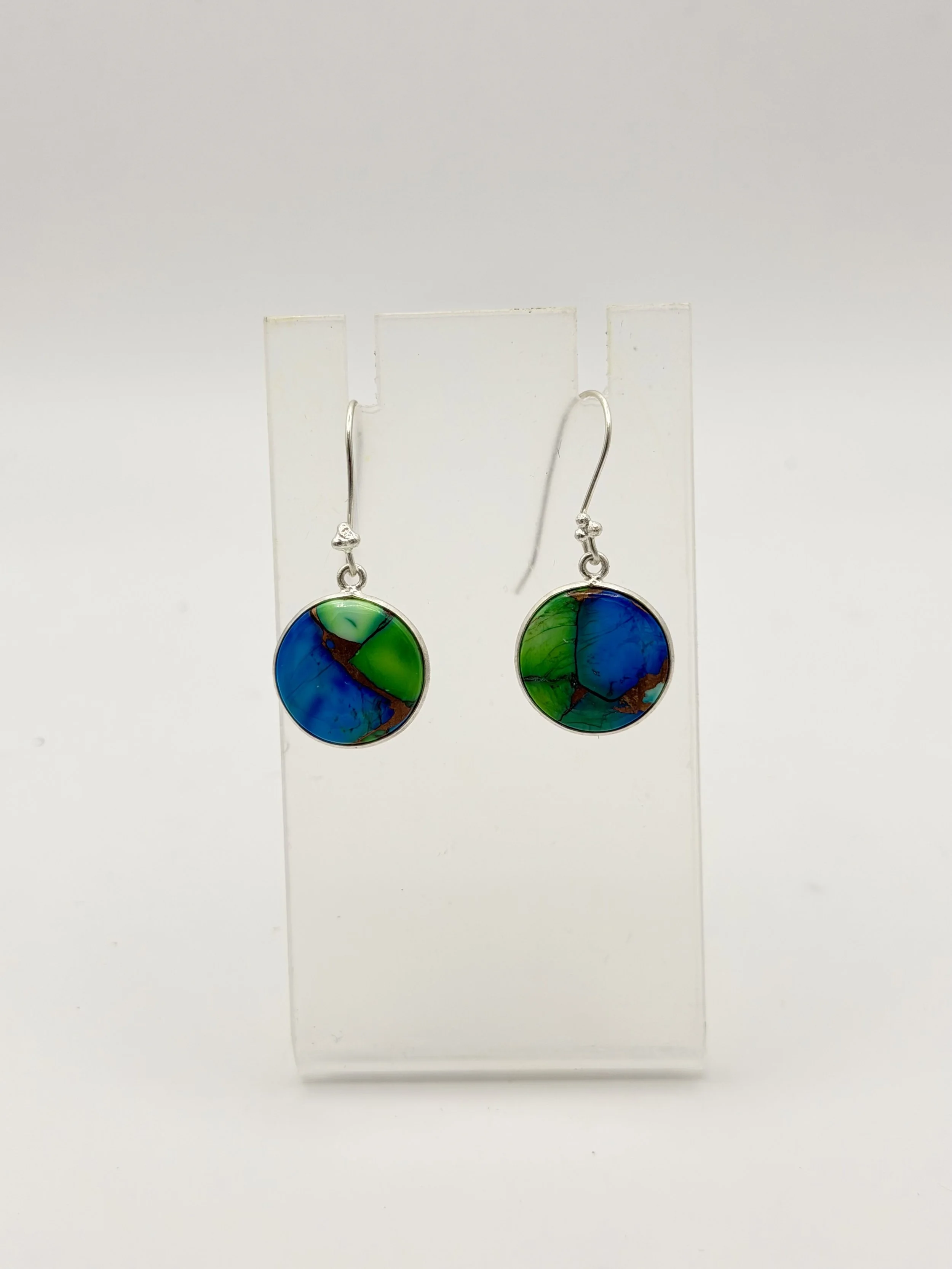
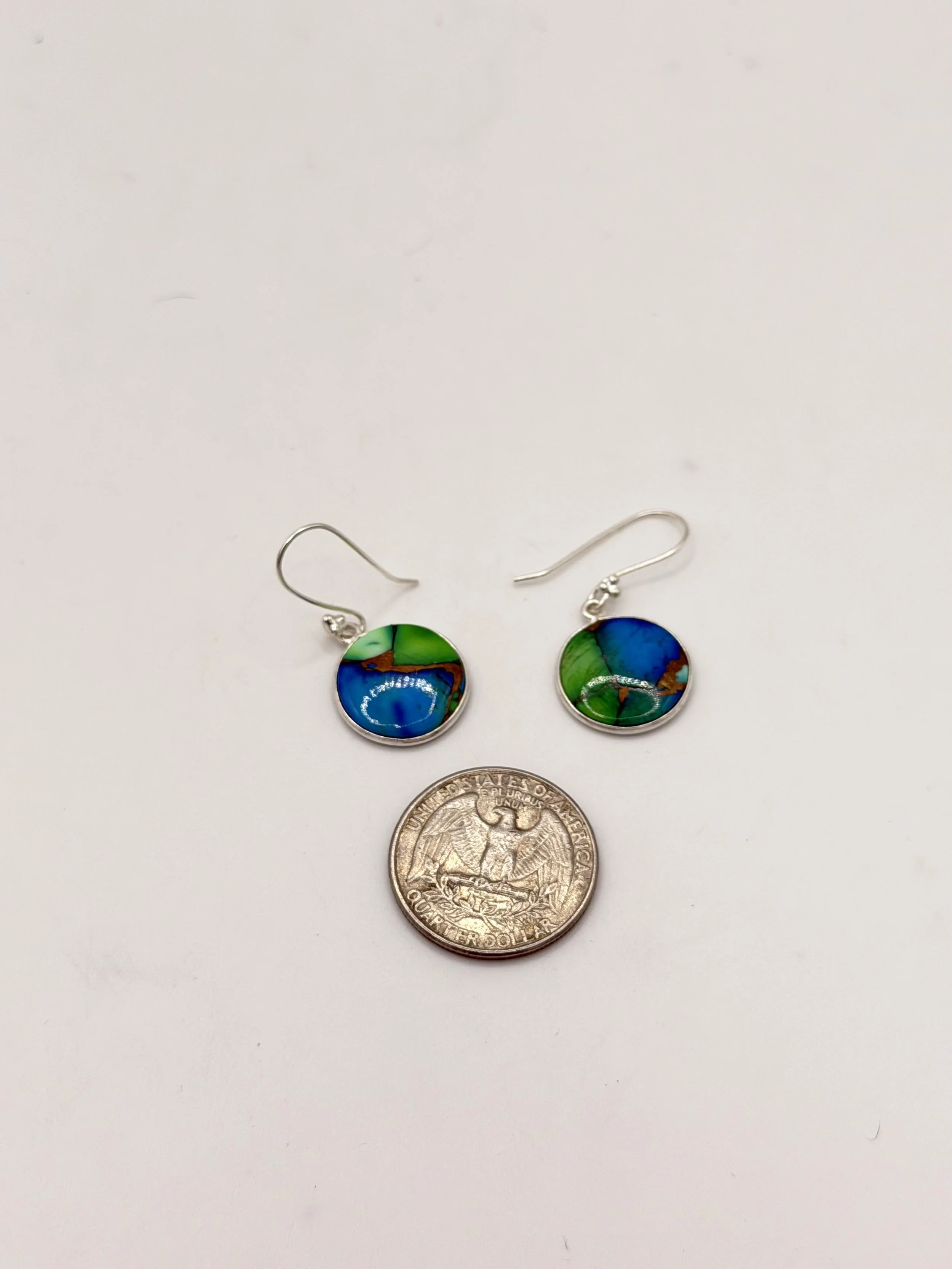
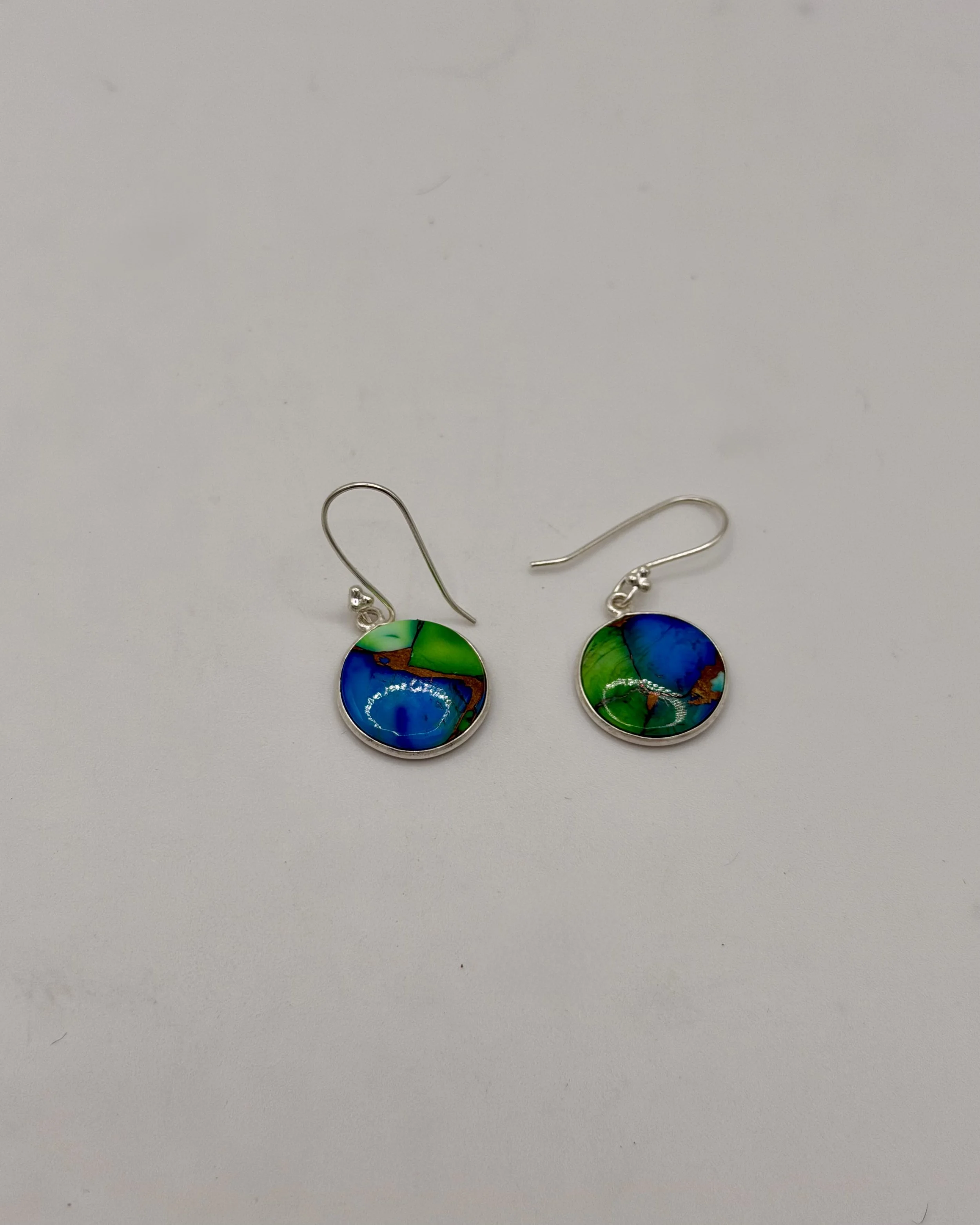
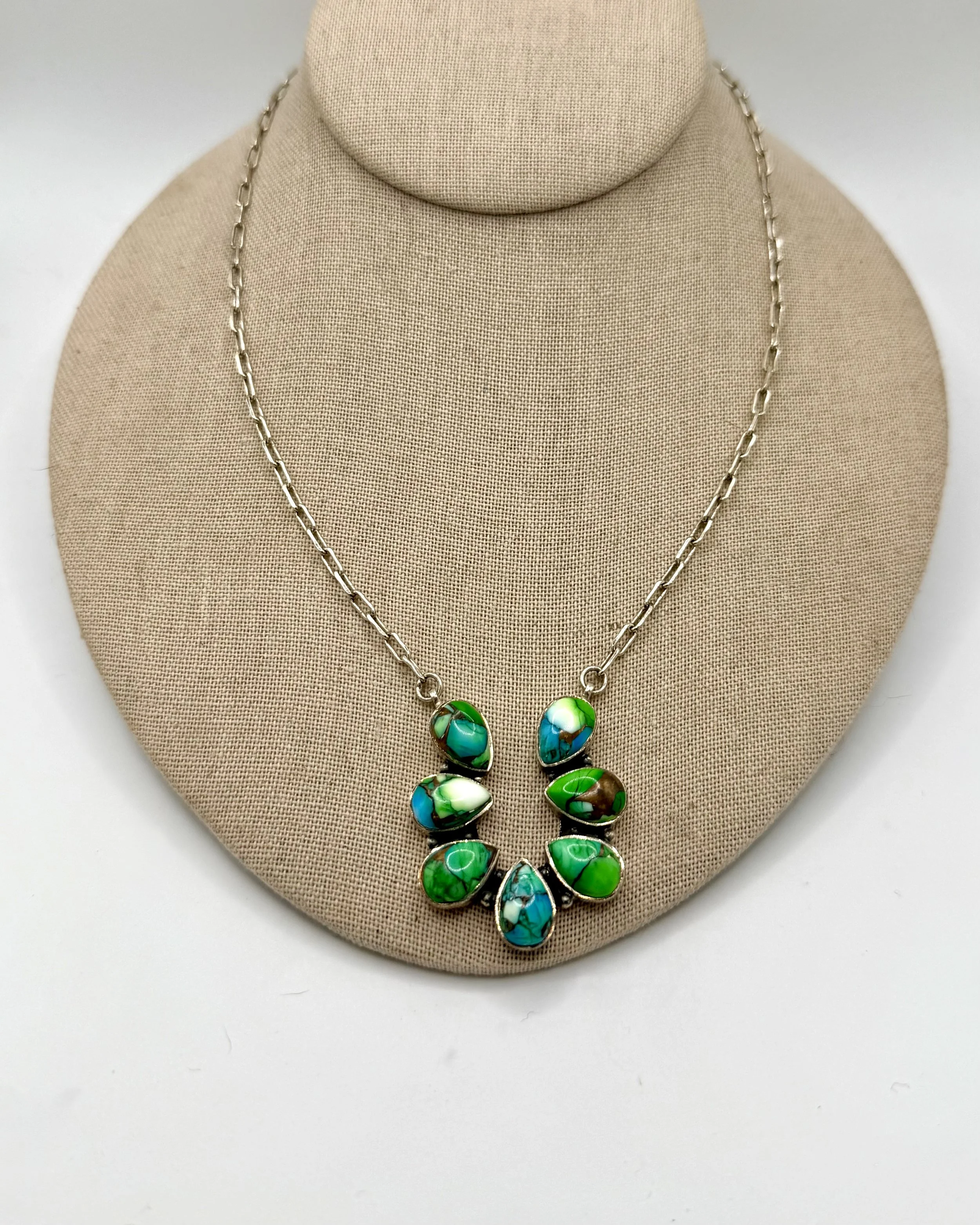
Handcrafted with 925 Sterling Silver and Peacock Dahlia stones. Measuring 18”, this stunning pendant necklace makes a wonderful statement peice.
The Naja symbol is elegant, iconic, and one of the most recognizable elements in Navajo jewelry. More than a simple crescent, it carries deep cultural meaning that stretches across continents and centuries.
Origins and history
The naja shape was introduced to the Americas by the Spanish but its roots reach far deeper—back to Paleolithic times.
Historians suggest some of the earliest uses were connected to fertility and life, making the crescent a symbol with ancient, life-affirming resonance.
In the Americas, the Spanish adapted the naja for horse bridles, believing it warded off the “evil eye” and protected both horse and rider.
Meaning and symbolism
Interpretations vary among individuals and families, but common themes include protection, resilience, and life.
For many Native people, the naja embodies strength and beauty, functioning as both an adornment and a talisman.
Its presence at the center of squash blossom necklaces makes it a focal point of tradition and artistry.
Why it endures
The naja’s simple, striking silhouette lends itself to countless adaptations while keeping its symbolic weight intact.
Worn as a centerpiece in Native American pieces, it connects wearers to history, community, and continuity—quietly powerful, visually captivating.
At The Silver Dahlia, we celebrate the timeless spirit of the naja—crafted with respect for tradition and a wink of modern flair. Whether you’re drawn to its history or its bold shape, the naja remains an enduring emblem of protection, resilience, and beauty.
Handcrafted with 925 Sterling Silver and Peacock Dahlia stones. Measuring 18”, this stunning pendant necklace makes a wonderful statement peice.
The Naja symbol is elegant, iconic, and one of the most recognizable elements in Navajo jewelry. More than a simple crescent, it carries deep cultural meaning that stretches across continents and centuries.
Origins and history
The naja shape was introduced to the Americas by the Spanish but its roots reach far deeper—back to Paleolithic times.
Historians suggest some of the earliest uses were connected to fertility and life, making the crescent a symbol with ancient, life-affirming resonance.
In the Americas, the Spanish adapted the naja for horse bridles, believing it warded off the “evil eye” and protected both horse and rider.
Meaning and symbolism
Interpretations vary among individuals and families, but common themes include protection, resilience, and life.
For many Native people, the naja embodies strength and beauty, functioning as both an adornment and a talisman.
Its presence at the center of squash blossom necklaces makes it a focal point of tradition and artistry.
Why it endures
The naja’s simple, striking silhouette lends itself to countless adaptations while keeping its symbolic weight intact.
Worn as a centerpiece in Native American pieces, it connects wearers to history, community, and continuity—quietly powerful, visually captivating.
At The Silver Dahlia, we celebrate the timeless spirit of the naja—crafted with respect for tradition and a wink of modern flair. Whether you’re drawn to its history or its bold shape, the naja remains an enduring emblem of protection, resilience, and beauty.